How Leaving Fallen Leaves Helps Pollinators Thrive

Updated: 2 days ago
A tidy fall yard can look harmless, but for many pollinators it is a disaster. When every leaf is raked, bagged, shredded, and hauled away, a whole winter habitat disappears with it.
Fallen leaves are not yard waste to a bee, butterfly, moth, beetle, or fly. They are shelter, camouflage, insulation, and food for the soil life that supports the plants pollinators visit later. A layer of leaves under trees and shrubs can hold next year’s wings.
Leaving leaves does not mean giving up on a cared-for yard. It means choosing where leaves can stay, where they should move, and how to handle them in a way that keeps both people and pollinators in mind.

Leaf litter is winter shelter hiding in plain sight
Pollinators do not vanish when the flowers fade. Many survive winter in quiet, hidden life stages. Some are eggs. Some are caterpillars. Some are pupae tucked into brown leaves. Some are adult insects waiting for warmth.
Leaf litter gives them a stable place to wait.
A thin, loose layer of leaves acts like a blanket. It helps buffer temperature swings, protects against drying wind, and hides insects from hungry birds and other predators. Under those leaves, the ground stays more moist and less exposed. That matters when an insect is small, still, and unable to move to a better spot.
Many familiar pollinators rely on this kind of cover.
Luna moths and other large silk moths often form cocoons in leaf litter. Some butterflies pupate close to the ground, where leaves help hide and protect them. Bumble bee queens may overwinter in shallow burrows in loose soil, often near plant debris that helps shield the ground. Beetles, flies, and tiny native bees may also spend the cold months in or near this protected layer.
The life in a leaf pile is not always obvious. That is part of the point. Good habitat often looks quiet.
When leaves are cleaned up too aggressively, those insects may be removed, crushed, exposed, or sent to the landfill. Even shredding can harm insects that are tucked inside leaves or cocoons. A lawn mower does not know the difference between a leaf and a sleeping moth.
Leaving fallen leaves helps pollinators thrive because it lets more of them survive until spring.
Leaves support the whole food web beneath flowers
Pollinators need flowers, but flowers do not grow alone. Healthy blooms begin with healthy soil.
When leaves break down, they feed fungi, bacteria, springtails, worms, and other small decomposers. These organisms turn leaves into rich organic matter. Over time, that improves soil structure and helps plants grow stronger roots. Stronger plants often produce better foliage, more flowers, and more nectar and pollen.
That is a direct gain for bees, butterflies, moths, flies, beetles, and hummingbirds.
Leaf litter also keeps soil from drying out as quickly. Under trees and shrubs, this can make a big difference during dry spells. Moisture supports plant health and helps decomposers keep working. Bare soil, by contrast, heats up faster, loses water faster, and erodes more easily.
A living leaf layer does several jobs at once:
It shelters overwintering insects.
It feeds soil organisms that build fertility.
It protects plant roots from harsh temperature swings.
It reduces erosion and runoff.
It helps garden beds hold moisture.
It creates soft landings for caterpillars that drop from trees.
That last point is easy to miss. Many caterpillars feed in trees, then drop to the ground to finish growing or pupate. If they fall onto compacted turf, pavement, or bare mulch, survival may be harder. If they fall into a leafy bed below the tree, they land in cover.
This is why the space under trees matters so much. Oaks, cherries, willows, maples, birches, and many other trees host caterpillars and other insects. A ring of leaf litter and native plants beneath them turns the ground into part of the habitat instead of a dead zone.

A clean yard is not always a healthy yard
For decades, fall yard care has often meant removing every leaf. The goal was a smooth lawn and a neat winter look. That habit made sense for turf, but it did not account for the animals that use leaves.
Bagging leaves removes nutrients from the yard. It also turns a free natural resource into a disposal problem. In many communities, leaves are collected for compost, which is better than sending them to a landfill. Still, the pollinator habitat is gone from the place where it was needed.
Shredding leaves with a mower can help them break down faster on lawns, but it has a tradeoff. Shredded leaves are less useful as shelter. If insects are inside, they may not survive. Fine leaf pieces can be good for compost or paths, but they are not the same as an intact leaf layer in a garden bed.
A balanced approach works better.
Think of the yard in zones. Some places should stay clear. Walkways, storm drains, driveways, decks, and thick turf areas may need cleanup for safety and plant health. Other places can hold leaves all winter with little downside.
Good places to leave leaves include:
Under trees
Around shrubs
In perennial beds
Along fence lines
Behind ornamental grasses
Around logs or brush piles
In woodland-style corners
Beneath hedges and native plantings
A yard does not need to look abandoned to support wildlife. A defined edge can make a leafy bed look intentional. A low border of stones, branches, or plants can show that the leaves are there on purpose.
The best way to leave leaves without smothering the lawn
Grass can suffer under a heavy, wet mat of leaves. That is one reason many people rake in the first place. The answer is not to leave every leaf exactly where it falls. The answer is to move leaves from places they cause problems to places they can do good.
Start with the lawn. If leaves cover the grass so thickly that little light reaches the blades, rake some off. Use a rake or leaf blower on a low setting rather than mowing everything into tiny pieces. Move those leaves into beds under trees and shrubs.
Aim for a loose layer, not a packed blanket. In most planted beds, several inches of fluffy leaves can work well because the layer settles over winter. Around small perennials, keep crowns from being buried too deeply. Around tree trunks, pull leaves back a bit so they do not stay wet against the bark.
Whole leaves usually offer better shelter than shredded leaves. Large, curled leaves create small air pockets. Those pockets help insulate insects and soil. If leaves are very large and prone to matting, such as some maple leaves, mix them with twigs, pine needles, dry stems, or smaller leaves to keep the layer airy.
Avoid stuffing leaves into plastic bags for disposal when you have room to use them on site. Leaves are free mulch. They are also seasonal habitat that no store-bought product can fully replace.

Leaf litter works best with native plants
Leaves help most when they sit beneath plants that pollinators can actually use. Native trees, shrubs, grasses, and flowers often support native insects more directly than highly altered ornamental plants.
That does not mean every plant in a yard must be native. It does mean a garden with more native plants usually offers more food and shelter across the seasons.
Spring flowers feed early bees. Summer blooms support butterflies, bees, wasps, beetles, and flies. Fall flowers help late-season pollinators build energy before cold weather. Then fallen leaves and standing stems help many of those insects make it through winter.
A pollinator-friendly yard has rhythm:
Season | What pollinators need | What helps |
Spring | Early nectar, pollen, and nesting sites | Native spring flowers, bare soil patches, undisturbed beds |
Summer | Steady blooms and host plants | Diverse flowers, native grasses, shrubs, and trees |
Fall | Late food and safe winter cover | Asters, goldenrods, seed heads, fallen leaves |
Winter | Protection from cold, wind, and predators | Leaf litter, standing stems, brush piles, logs |
Host plants matter as much as nectar plants. A butterfly may drink from many flowers, but its caterpillars often need specific plants. Monarch caterpillars need milkweed. Black swallowtail caterpillars use plants in the carrot family, including dill, fennel, parsley, and native relatives. Many moth caterpillars rely on native trees and shrubs.
If caterpillars feed above and leaf litter waits below, the habitat begins to connect.
Do not rush spring cleanup
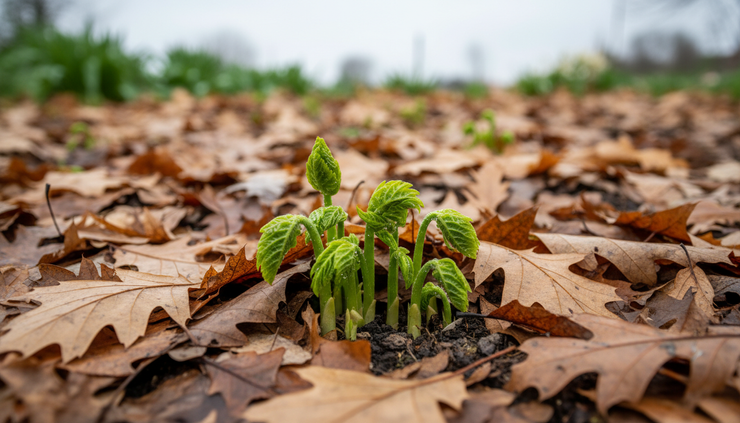
Fall is not the only season when leaf litter matters. Spring cleanup can undo the benefits if it happens too early.
Many insects remain tucked away until temperatures rise and food is available. If leaves are removed on the first mild day, overwintering pollinators may still be inside. A warm afternoon in March does not mean the whole insect community has emerged.
A gentler approach helps.
Wait until spring has settled in and plants are actively growing. When cleaning beds, move slowly. Keep some leaf litter in place, especially under shrubs and trees. If leaves are too thick around emerging plants, loosen them by hand and shift them to the back of the bed instead of bagging them.
Standing stems also deserve patience. Some native bees nest in hollow or pithy stems. Cutting every stem to the ground in early spring can remove nesting sites. If a bed looks messy, cut stems high and leave the lower portions standing for a while. Bundled stems can also be tucked in a quiet corner.
This kind of cleanup is less about neglect and more about timing. It gives insects a chance to leave their winter shelter on their own.
What about pests, ticks, and messy beds?
Leaving leaves raises fair questions. Will it attract pests? Will it increase ticks? Will the garden look uncared for?
The answer depends on how leaves are managed.
A deep, wet pile against a foundation is not the same as a loose layer under shrubs. Leaves should not block drains, cover sidewalks, or sit in thick mats against buildings. In fire-prone areas, follow local defensible space guidance and keep combustible material away from structures as advised.
Ticks can use humid leaf litter, especially in areas with deer, mice, and tall vegetation. Pollinator gardening does not require putting leaf piles where people walk or play. Keep leaves in garden beds, woodland edges, and low-traffic areas. Maintain clear paths. Use personal tick checks after working outdoors in regions where ticks are common.
As for appearance, structure solves much of the problem. A yard can look neat and still keep leaves.
Try these simple choices:
Keep crisp edges along beds and paths.
Move leaves into defined planting areas.
Use branches, logs, or stones to frame natural sections.
Keep front walkways and entrances clear.
Leave seed heads and stems in clusters rather than scattered everywhere.
Add evergreen shrubs or grasses for winter shape.
A pollinator habitat does not need to be wild everywhere. Even one leafy corner can matter.
Small changes make a real habitat
The easiest way to begin is to choose one bed under a tree or along a fence and stop treating leaves there as waste. Let them settle. Add more from the lawn. Watch what happens through the seasons.
Over time, that bed may need less store-bought mulch. Soil may become darker and easier to work. Birds may visit to search for insects. Native flowers may perform better. Moths, bees, and butterflies may have more chances to complete their life cycles.
A simple fall plan could look like this:
Clear leaves from hard surfaces and storm drains.
Rake thick leaves off turf before they smother grass.
Move whole leaves into garden beds and under trees.
Keep the leaf layer loose and away from trunks and foundations.
Leave plant stems and seed heads standing through winter.
Delay major cleanup until spring is truly underway.
This is not all-or-nothing gardening. It is better gardening with a lighter touch.
Leaves fall at exactly the time many insects need cover. Trees drop the raw material for winter habitat. Soil organisms begin turning it into next year’s fertility. The whole system is already working. The best thing to do is often less than we think.
A rake can still have a place. So can a neat path, a healthy patch of lawn, and a cared-for front yard. The shift is simple: stop asking how to get rid of every leaf, and start asking where those leaves can help life continue.
When spring flowers open, the pollinators that visit them may be the ones that survived under last fall’s leaves.


Comments